Rescuer · 1910-2008
Irena Sendler
She was never herself a target. She chose, repeatedly, to write down true names the regime was trying to erase, and to bury that record where it could survive.
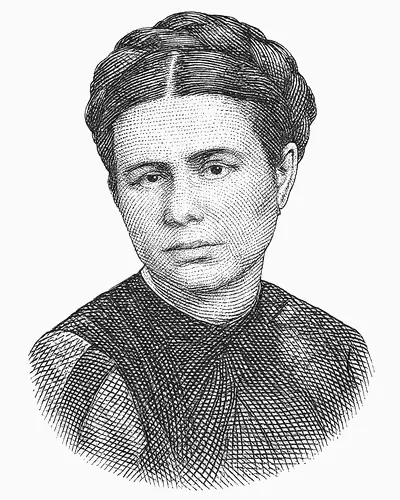
A doctor's daughter
Irena Sendler was born in Warsaw on 15 February 1910 and raised largely in Otwock. Her father, Dr. Stanisław Krzyżanowski, treated poor patients, many of them Jewish, and died of typhus in 1917 after treating patients in an epidemic. She trained as a social worker, publicly opposed the segregated "ghetto benches" for Jewish students at university and in 1935 joined the City of Warsaw's Department of Social Welfare and Public Health.
The inspection pass
When the occupation dismissed the department's Jewish staff in 1939, Sendler and colleagues began falsifying records to route aid to Jewish families under invented names. After the Warsaw Ghetto was sealed in 1940, an official epidemic-inspection pass let her walk through the gate legally. Inside, she carried food, medicine and clothing to families the department was not authorized to help.
Żegota and the jars
After the Great Deportation of summer 1942, Sendler joined Żegota, the Council to Aid Jews, under the codename "Jolanta," and by 1943 led its Children's Section. The section placed Jewish children with Polish families, orphanages and convents under false identities. Sendler wrote each child's true and false names on thin strips of paper and buried them in jars in a colleague's garden on Lekarska Street, so that families could one day be found.
Pawiak
The Gestapo arrested Sendler in October 1943 after another woman gave up her name under interrogation. She was tortured at Pawiak Prison, which permanently injured her feet and legs, and she did not give up the network or the children. She was sentenced to death and freed when Żegota bribed a guard. She lived underground as "Klara Dąbrowska" for the rest of the occupation, kept running the Children's Section and served as a nurse in the 1944 Warsaw Uprising.
Recognition
Yad Vashem recognized Sendler as Righteous Among the Nations in 1965. Her story reached a wide audience after students in Uniontown, Kansas, staged the play Life in a Jar in 1999. Poland awarded her the Order of the White Eagle in 2003. She died in Warsaw on 12 May 2008, aged 98.
Further reading
- Mieszkowska, Anna. Irena Sendler: Mother of the Children of the Holocaust. Praeger, 2010.
- Bikont, Anna. Sendlerowa. W ukryciu. Wydawnictwo Czarne, 2017.
- Yad Vashem, Righteous Among the Nations, Irena Sendler.
- United States Holocaust Memorial Museum, Holocaust Encyclopedia, oral history of Irena Sendler.
In the book
Irena Sendler is one of the 36 women whose documented stories are told in Women Without Fear, a book and documentary project of The Legacy Project. The book is being prepared for publication. You can read one full sample chapter now, on Róża Robota.