Resister · 1920-2012
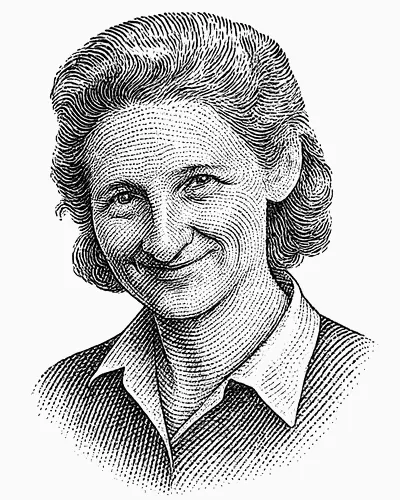
Vitka Kempner
She looked at what others could not bear to see, and led sixty fighters out of the Vilna ghetto through the sewers in total darkness.
From Kalisz to Vilna
Vitka Kempner was born on 14 March 1920 in Kalisz, Poland. After the German invasion in 1939 she watched what was done to Jews in the open in the first week of the occupation, and she resolved never to be humiliated. She left Kalisz, reached Vilna under Soviet occupation and joined the Hashomer Hatzair underground.
A woman in no file
After Germany invaded in June 1941 and the Jews of Vilna were driven into two ghettos, Vitka and her closest friend Rozka Korczak lived there unregistered. A woman who is in no file cannot be found in one, and could move. In January 1942 the ghetto factions united as the United Partisan Organization (FPO), and Vitka was given operational work because she noticed everything and held every detail in her head.
The first sabotage
After three days of reconnaissance, Vitka and Itzke Matzkevich derailed a German military train on the Nay-Vileyka line on 8 July 1942. The book records it as the first verified act of armed resistance against German forces in Vilna. She chose a stretch of track worked by no Jewish labor detail, knowing the Germans would take reprisals: the nearest Polish railwaymen were shot. She never dressed that choice up as anything other than what it was. Some sources question details of the attack; the book follows the majority of the record.
Cutting the city's arteries
Through 1942 and 1943 she led a quieter campaign against the utilities serving the occupation. With a team of younger fighters she set magnetic bombs built by the ghetto's engineers. Four transformers went up in one campaign and Vilna went dark, and the water supply lines were cut after that.
Out through the sewers
In September 1943, as the Germans moved to finish the ghetto, the FPO gave the order to evacuate. Vitka had been through the sewers more often than anyone alive. She led some sixty fighters down into the dark, with no light, and counted every turning. Every one of them came up behind her. They walked to the Rūdninkai Forest, where some six hundred people gathered, and she led patrols as a partisan until the Soviets liberated Vilna in July 1944.
After the war
Vitka and her comrades helped organize the Berihah, the illegal movement of survivors toward Palestine. In 1946 she reached Palestine with Abba Kovner; they married and settled at Kibbutz Ein HaHoresh and raised two children. She later studied clinical psychology at Bar-Ilan University and developed a therapy using color for children who could not or would not speak. In 2004 she gave Kovner's revolver to Yad Vashem. She died in Israel in February 2012, aged 91.
And we were tired too but the women were stronger than the men.Vitka Kempner, testimony, quoted in Women Without Fear, Chapter 1
Further reading
- Kovner, Abba. Scrolls of Testimony. Stanford University Press, 2001.
- Porat, Dina. The Fall of a Sparrow: The Life and Times of Abba Kovner. Stanford University Press, 2010.
- Cohen, Rich. The Avengers: A Jewish War Story. Knopf, 2000.
- Yad Vashem, Vilna Ghetto and FPO collection, Vitka Kempner-Kovner testimonies.
In the book
Vitka Kempner is one of the 36 women whose documented stories are told in Women Without Fear, a book and documentary project of The Legacy Project. The book is being prepared for publication. You can read one full sample chapter now, on Róża Robota.