Resister · 1917-1943
Gusta Davidson Draenger
In a death cell she wrote her story on scraps of paper and made sure it left the prison before she did.
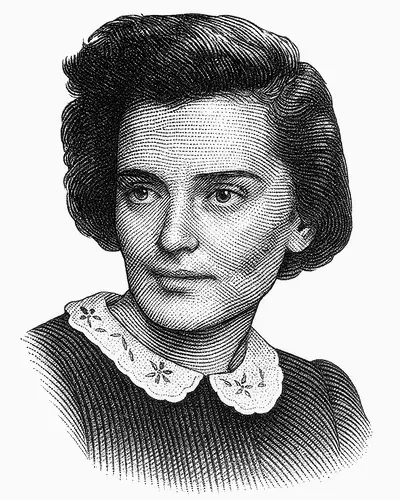
From Akiva to the underground
Gusta Davidson Draenger was born in Kraków in 1917 into a Gur Hasidic family. She joined the youth movement Akiva, served on its central committee, edited its paper Zeirim and kept its archive. She was arrested in September 1939 with Shimshon Draenger and released by bribe. They married in early 1940.
He-Halutz ha-Lohem
In August 1942 the Kraków movements merged into He-Halutz ha-Lohem, under Dolek Liebeskind and Shimshon Draenger. On 22 December 1942 the group attacked the Cyganeria café as part of a day of coordinated actions.
The death cell
She was arrested on 18 January 1943. Held in the death cell from February to April 1943, she wrote Pamiętnik Justyny (Justyna's Narrative) on scraps of paper, including toilet paper, and had it copied out in four sets.
Escape and capture
On 29 April 1943 she escaped from a transport toward Płaszów. The remnant of the group printed its paper from Bochnia and Nowy Wiśnicz. She was recaptured on 8 November 1943 near the Hungarian border. She and Shimshon did not survive. She was 26.
Her words survive
Her narrative was published in Polish in 1946 and in Hebrew in 1953 by the Ghetto Fighters' House. The English edition, Justyna's Narrative, edited by Eli Pfefferkorn and David H. Hirsch, appeared in 1996 from the University of Massachusetts Press.
Further reading
- Draenger, Gusta Davidson. Justyna's Narrative. Eds. Eli Pfefferkorn and David H. Hirsch. University of Massachusetts Press, 1996.
- Wikipedia: Gusta Davidson Draenger
Related profiles
In the book
Gusta Davidson Draenger is one of the 36 women whose documented stories are told in Women Without Fear, a book and documentary project of The Legacy Project. The book is being prepared for publication. You can read one full sample chapter now, on Róża Robota.